Part 2: Momentum, Not Persistence
What actually keeps a lead alive after the first reply
Written By: OutPerform
6 Minutes Read

Part two of a two-part look at what actually keeps a lead alive. Part one looked at the first reply; this one looks at everything after it.
A lead does not go cold on a single day. It goes cold on a Tuesday you don't notice, because nothing dramatic happened nobody said no, nobody unsubscribed, nobody blocked the number. They just stopped being the most urgent thing in someone's day, and nothing arrived to make them urgent again.
That is the part of the sales process most businesses get wrong, and it has nothing to do with response speed. You can nail the first five minutes and still lose the deal three weeks later, quietly, to silence.
Momentum, not persistence
"Follow up more" is not useful advice. Most sales teams already know they should follow up; the problem is rarely willpower, it's design. Nobody wakes up and decides to stop chasing a lead. What actually happens is smaller and more forgivable: the lead didn't reply to touch two, so touch three felt awkward to send. A week passed. Now touch three feels very awkward to send. Eventually the lead isn't "being followed up on" or "not being followed up on" it's just sitting there, unassigned to either category, until someone stumbles on it during a pipeline cleanup and closes it as "no response."
That's not a persistence failure. It's a momentum failure and the two require completely different fixes.
Persistence is a personal trait. It depends on the individual salesperson's discipline, mood, and memory on any given day. It's inconsistent by nature, because humans are inconsistent by nature.
Momentum is a system property. It doesn't ask whether today was the day someone remembered to check in it happens on schedule regardless of who is having a good week. A lead moves forward or it doesn't, and whether it does isn't supposed to depend on anyone's memory.
The businesses that reliably convert warm leads aren't the ones with the most disciplined salespeople. They're the ones where a lead going quiet doesn't rely on a human noticing.

What actually kills momentum
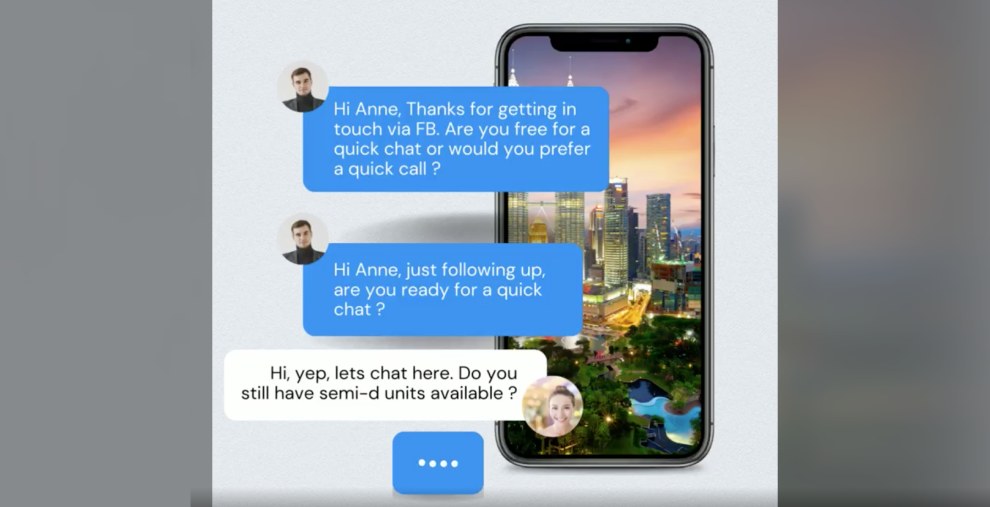
Going silent after the first reply. Plenty of the discipline goes into that first response matching the five-minute window, answering the question, sounding human. Then, once the lead doesn't reply immediately, the system (and the person behind it) treats the conversation as closed. The lead isn't lost at message one. It's lost at message two, the one that never got sent.
Treating every non-reply the same way. A lead who asked a specific question and went quiet is in a completely different state than a lead who never engaged at all. The first is probably busy, not uninterested, they're waiting for the right moment, not avoiding you. Chasing both the same way, at the same pace, with the same message, wastes effort on the second group and under-serves the first.
"Just checking in." This is the message equivalent of the acknowledgement problem from part one it contains no new information and asks nothing that requires an answer. It doesn't move the conversation forward, it just proves someone remembered the lead exists. A lead who ignored a real message will ignore this one faster.
No clear endpoint. Momentum-preserving follow-up has a defined arc - it escalates, it changes angle, and eventually it either converts or explicitly moves to a slower nurture cadence. Without that structure, leads don't get "worked," they get revisited at random whenever someone has a spare ten minutes, which is really just persistence again, wearing a different name.
What a real cadence looks like
Not every follow-up should look the same, because not every lead arrived the same way.
A lead who messaged first (inbound, warm) needs contact that respects that they already showed intent they don't need to be sold on the category, only nudged past whatever made them pause. This is where a short, specific follow-up ("did you have a chance to look at the price list I sent?") does more work than a longer one.
A lead who hasn't engaged yet (outbound, cooler) needs something closer to education, the follow-up has to earn attention it hasn't been given, which usually means a different angle each time rather than the same pitch repeated with more urgency.
Both of these are cadence problems, not persistence problems. The gap isn't how many times someone follows up, it's whether the follow-up changes anything, and whether it happens whether or not a human remembers to send it.

Where this actually breaks in practice
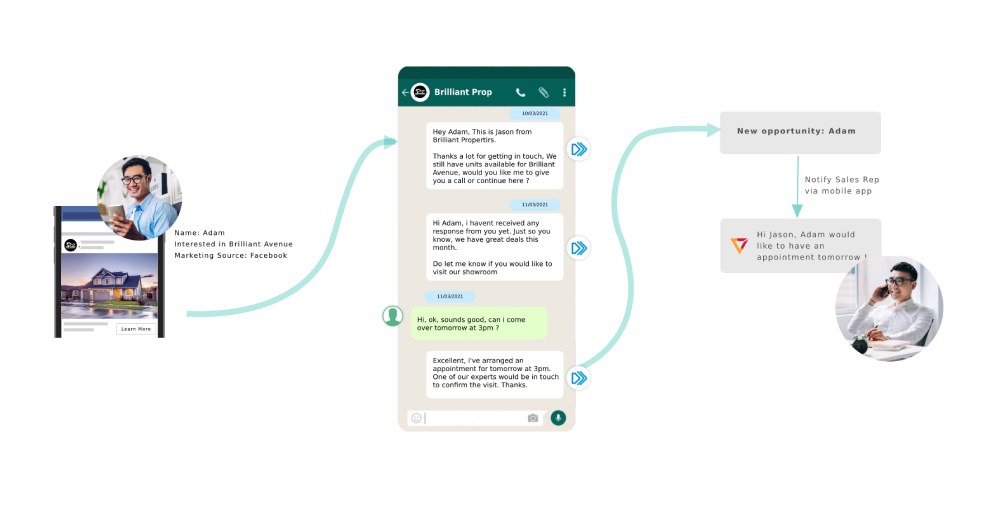
This is where the theory usually meets a genuinely boring operational reality: a lead comes in through WhatsApp, gets a fast first reply, and then lives in someone's personal chat list. There's no scheduled touch two. There's no distinction between "warm, went quiet" and "never engaged." Follow-up becomes whatever the salesperson remembers to do between calls, which reasonably, humanly, is usually nothing, because there's no system reminding them the window is closing.
The fix isn't a more motivated sales team. It's making the next touch not depend on anyone remembering it's due.
The real question
Every lead sitting in a pipeline right now is in one of two states: still moving, or already stalled and nobody's noticed yet. The uncomfortable part is that from the outside, on any given day, those two states look identical. A lead that will close in three weeks and a lead that's already gone cold both look the same in a CRM: quiet.
The only way to tell the difference is to have already built a system where quiet doesn't mean forgotten.
Look at your own pipeline. Find a lead that's gone quiet. Ask whether anything is scheduled to happen next, not "whether someone should follow up," but whether something actually will, on a specific day, without anyone having to remember.
If the answer is no, that lead isn't lost yet. But it will be, and it won't be anyone's fault, which is exactly the problem.
Back to Part 1: Auto-reply ≠ response: the difference customers can feel